
Resistance Against Mughal Expansion
- Home
- Resistance
Mughal Ambitions in Central India
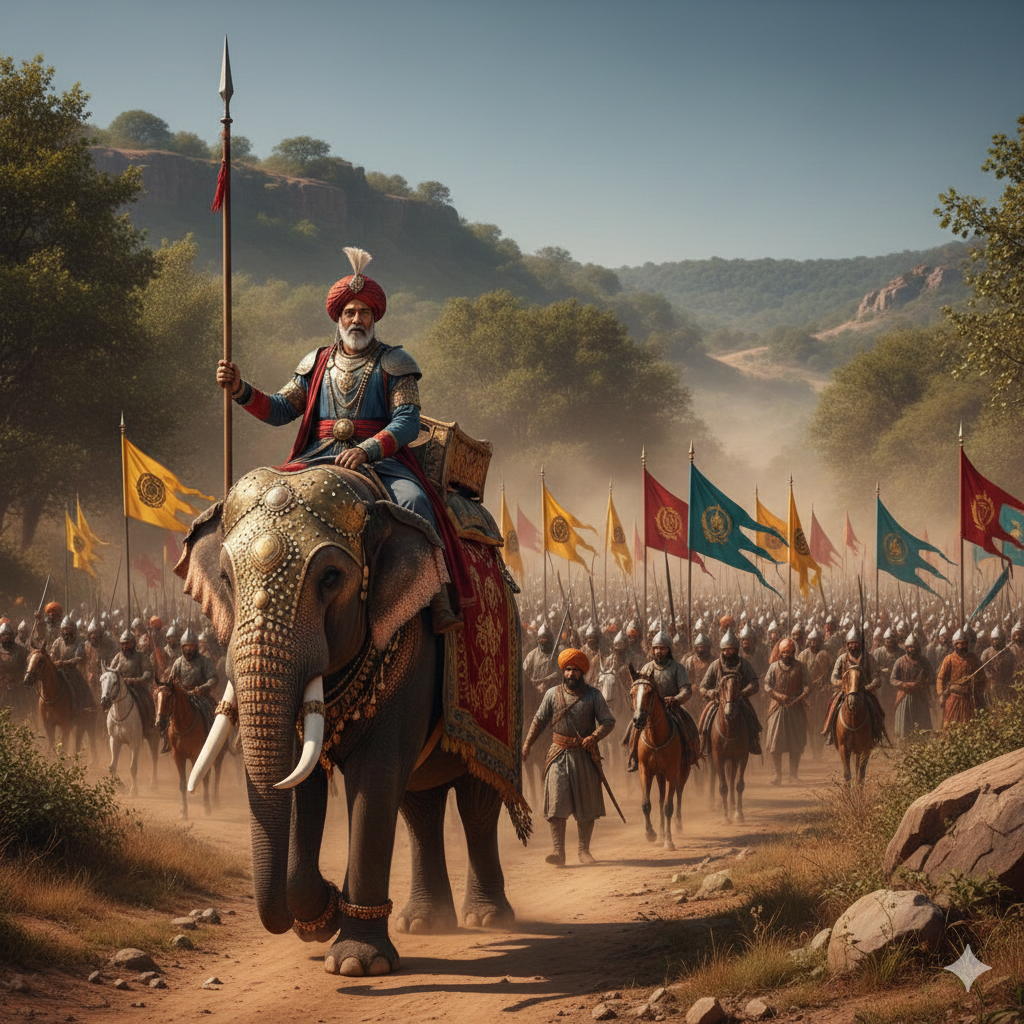
During the mid-16th century, Central India became a strategic focal point of Mughal expansion under Emperor Akbar. The region’s rich natural resources, fertile lands, and crucial trade routes made it an attractive target for imperial consolidation. Gondwana, ruled by Rani Durgavati, lay at the crossroads between northern India and the Deccan, giving it immense military and economic importance. Mughal ambitions were driven not only by territorial gain but also by the desire to assert political dominance over independent regional kingdoms. Expeditions led by Mughal generals aimed to bring these autonomous regions under imperial administration, often through a combination of diplomacy, pressure, and armed intervention. Central India thus emerged as a contested space where local sovereignty directly confronted imperial ambition.
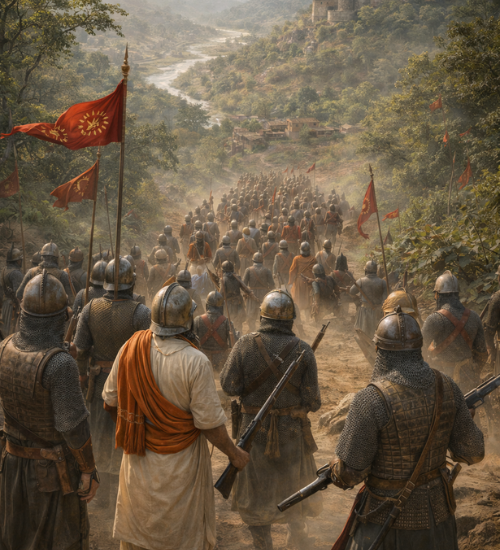
The conflict between the Mughal Empire and Gondwana symbolized a broader struggle between centralized imperial authority and indigenous regional rule. Rani Durgavati’s resistance represented a firm stand against Mughal expansion, emphasizing honor, self-rule, and dharmic governance. Despite being outmatched in resources, local forces relied on terrain knowledge, strategic defense, and popular support. The Mughal campaign in central India ultimately extended imperial influence, but it also exposed the limits of conquest when faced with determined resistance. Historically, these ambitions reshaped political boundaries and administrative systems, while culturally they left enduring narratives of bravery and sacrifice. The encounter remains a defining episode in understanding how imperial expansion impacted regional kingdoms and shaped the historical identity of central India.
Conflict with Asaf Khan
The conflict with Asaf Khan, a leading Mughal general, represents one of the most intense and defining episodes in the life of Rani Durgavati. Driven by Mughal ambitions to expand imperial control over central India, Asaf Khan advanced into the Gondwana region, seeking submission and territorial dominance. Rani Durgavati, refusing to surrender her kingdom’s independence, organized a determined resistance despite limited resources. Utilizing her deep knowledge of local terrain, forest warfare, and defensive strategy, she led her forces with exceptional courage and leadership. The battles, particularly around Narrai, revealed her resolve to protect her people and uphold sovereignty. Though ultimately outnumbered, her resistance became a lasting symbol of valor, sacrifice, and unyielding opposition to imperial aggression.

Strategic Warfare, Guerrilla Tactics & Battlefield Leadership
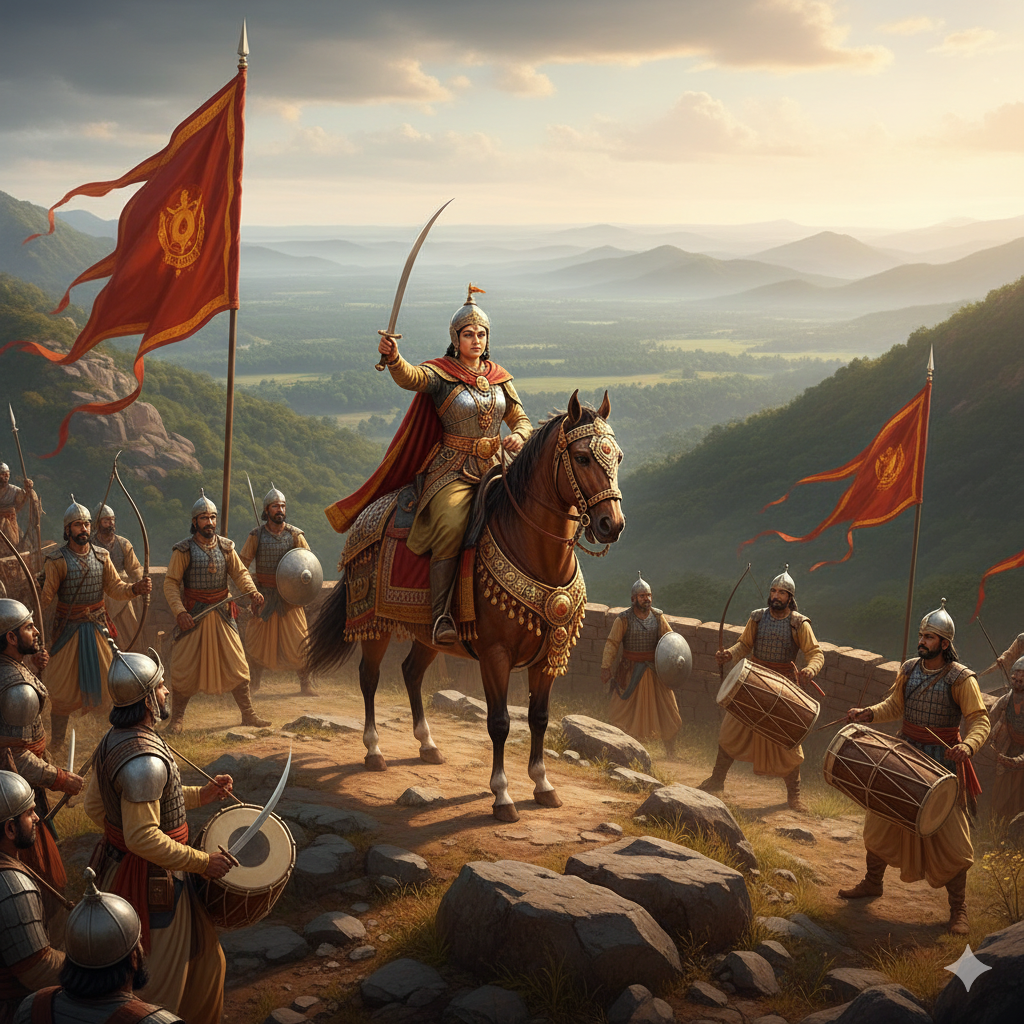
Rani Durgavati’s military resistance against Mughal forces demonstrated exceptional strategic warfare and battlefield leadership, grounded in an intimate understanding of Gondwana’s terrain. Rather than engaging solely in open-field battles, her forces employed guerrilla tactics, using dense forests, hills, and narrow passes to disrupt enemy movement and supply lines. Sudden ambushes, swift retreats, and surprise attacks allowed her warriors to counter the numerical and technological superiority of the Mughal army. These methods minimized losses while maximizing impact, reflecting a sophisticated approach to defensive warfare.
Strategic Warfare
Rani Durgavati employed intelligent defensive strategies, using terrain knowledge and flexible planning to counter larger and better-equipped Mughal forces effectively.
Guerrilla Tactics
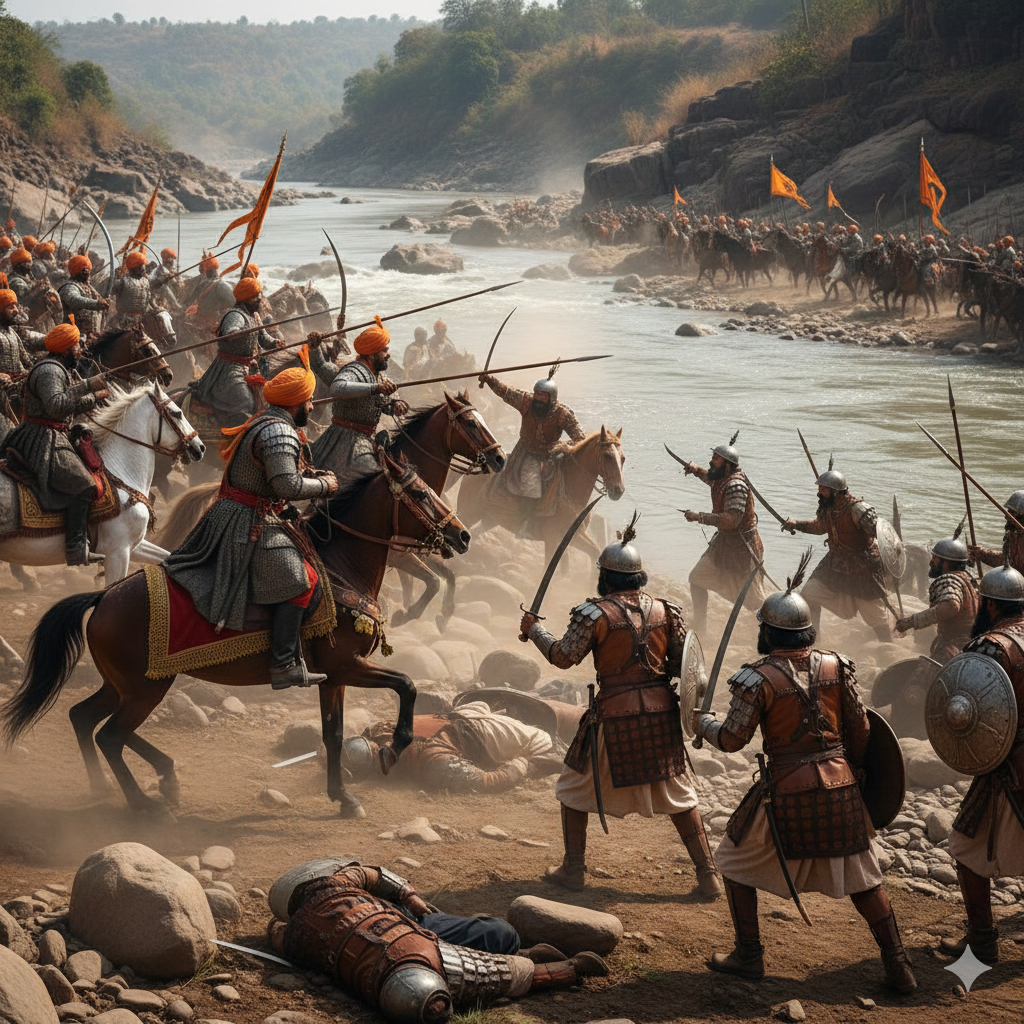
Forest ambushes, surprise attacks, and rapid movement enabled Gondwana warriors to disrupt enemy supply lines and weaken advancing Mughal troops.
Battlefield Leadership
Leading from the front, Rani Durgavati inspired courage and unity, maintaining morale and discipline even during the most intense combat situations.
attles of Narrai and Surrounding Regions
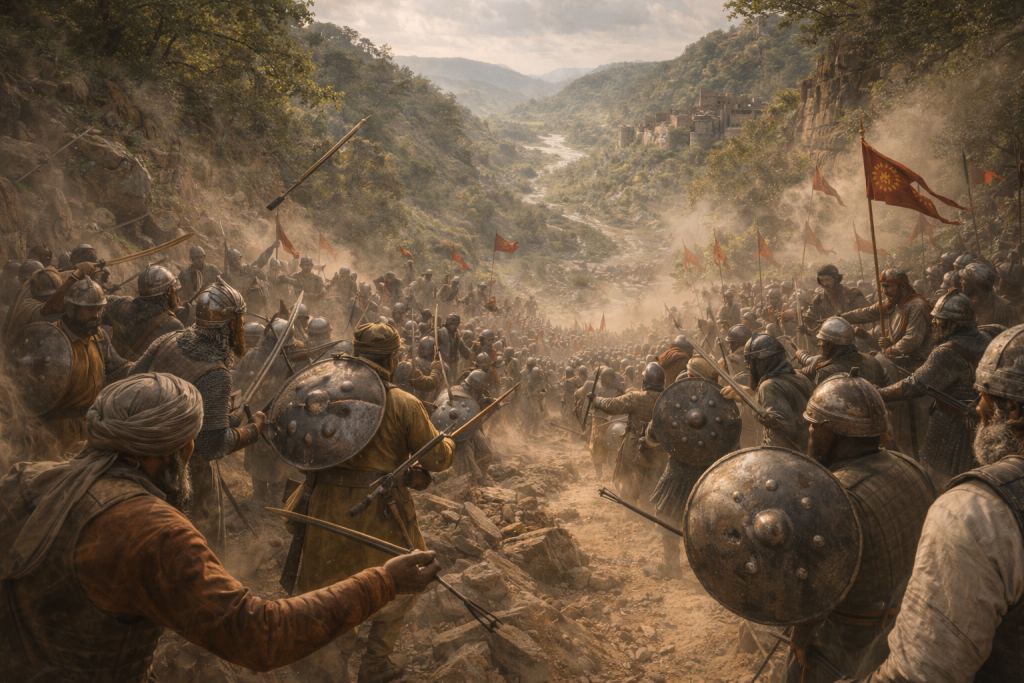
The Battles of Narrai stand as the most significant military confrontations in Rani Durgavati’s resistance against Mughal expansion in central India. Fought near the Narrai valley, this region’s rugged hills, dense forests, and narrow passages provided a natural defensive advantage for Gondwana forces. Rani Durgavati strategically chose this terrain to counter the numerical and technological superiority of the Mughal army led by Asaf Khan. Her warriors utilized ambushes, sudden strikes, and terrain-based maneuvers to slow enemy advances and inflict substantial losses. These engagements demonstrated her deep understanding of regional geography and her ability to transform the landscape into a powerful ally in warfare.Beyond Narrai, surrounding regions also witnessed intense skirmishes and defensive actions as Gondwana forces sought to protect key routes and settlements. Each engagement reflected a broader strategy of resistance aimed at exhausting the enemy rather than seeking immediate conquest. Though ultimately overwhelmed, the battles in and around Narrai became symbols of valor, sacrifice, and unwavering resolve.
attles of Narrai and Surrounding Regions
The Battles of Narrai stand as the most significant military confrontations in Rani Durgavati’s resistance against Mughal expansion in central India. Fought near the Narrai valley, this region’s rugged hills, dense forests, and narrow passages provided a natural defensive advantage for Gondwana forces. Rani Durgavati strategically chose this terrain to counter the numerical and technological superiority of the Mughal army led by Asaf Khan. Her warriors utilized ambushes, sudden strikes, and terrain-based maneuvers to slow enemy advances and inflict substantial losses. These engagements demonstrated her deep understanding of regional geography and her ability to transform the landscape into a powerful ally in warfare.Beyond Narrai, surrounding regions also witnessed intense skirmishes and defensive actions as Gondwana forces sought to protect key routes and settlements. Each engagement reflected a broader strategy of resistance aimed at exhausting the enemy rather than seeking immediate conquest. Though ultimately overwhelmed, the battles in and around Narrai became symbols of valor, sacrifice, and unwavering resolve.
The martyrdom of Rani Durgavati resonated far beyond the immediate conflict, leaving a lasting imprint on history, culture, and collective memory. Her sacrifice became a symbol of resistance for indigenous and regional kingdoms facing imperial expansion, reinforcing the idea that courage lies not only in victory but also in steadfastness under defeat. Oral traditions, folklore, and historical narratives remember her as a queen who remained unbroken in spirit, even at the cost of her life. Her refusal to surrender inspired future generations to value autonomy, honor, and cultural identity above personal survival. In broader historical context, her martyrdom challenged the narrative of absolute imperial dominance by highlighting acts of defiance rooted in moral conviction. Today, Rani Durgavati’s sacrifice continues to inspire discussions on leadership, resistance, and ethical governance, serving as a powerful reminder that true strength is measured by one’s commitment to principles, even in the face of overwhelming force.
